
-3.png?width=50&name=Square%20(2)-3.png)

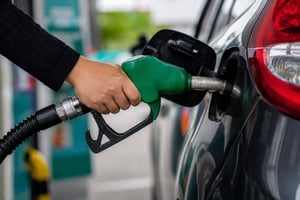
Yes, but not for anywhere near the RM1.99 a litre that circulates in group chats. That rate is reserved for Malaysian-registered cars, verified by MyKad at the pump, and since April 2026 Singapore-plated drivers caught using it face real fines, not a warning. The legal option is still cheaper than home, just by roughly half the saving most people assume.
What changed with Malaysia's petrol subsidy in 2026?
Malaysia rolled out its BUDI95 programme on 30 September 2025, fixing subsidised RON95 at RM1.99 a litre for Malaysian citizens, checked via MyKad at the pump and capped at a monthly quota. TFC flagged this subsidy reform as one to watch in its earlier look at Malaysia's Budget 2025 and what it means for Singaporeans, and it has now been running long enough to show its real effect on cross-border drivers.
Foreign-registered vehicles, including Singapore-plated cars, have for years been steered away from the subsidised pump; Malaysian media has reported this restriction dates back to 2010. What is genuinely new in 2026 is enforcement. From 1 April, a rule change made the vehicle owner personally liable for buying subsidised RON95, not just the petrol station that sold it. Previously, only station operators faced penalties.
What happens if you're caught pumping subsidised petrol?
On 9 April 2026, a Singaporean man in his 50s became the first person arrested under the new rule, caught filling his Singapore-registered Honda Civic with RON95 at a Johor Bahru station during an enforcement operation by Malaysia's Domestic Trade and Cost of Living Ministry (KPDN). Under the Control of Supplies Act 1961, he faced a maximum penalty of RM1 million (roughly S$315,000) or three years' jail, or both.
He pleaded guilty, and on 2 July 2026 the Johor Sessions Court fined him RM20,000, about S$6,300, or three months' jail in default. He paid on the spot. This was not an isolated incident either; Johor's KPDN has logged multiple complaints and investigations involving Singapore-registered cars since the subsidy began.
What can Singapore-registered cars legally pay for petrol in JB?
The straightforward legal option is RON97, unsubsidised and priced at market rate. As at the week of 10 to 16 September 2026, that works out to roughly RM4.50 a litre, about S$1.40. Compare that with Singapore's own pump prices, which even with the deepest loyalty-card and credit-card stacking still typically run S$2.50 to S$3 or more a litre for 95-octane.
There is still a genuine saving in crossing the Causeway, in other words, just a far smaller one than the figure most people quote. The gap between RM1.99 and RM4.50 is the gap between a rate you were never legally entitled to and the rate you actually pay. It is also not unique to petrol: TFC's own cost of living guide for Singaporeans considering Malaysia notes that even Johor Bahru's public bus pass carries the same citizenship restriction, so this two-tier pricing shows up more than once if you look for it.
So, is the JB petrol run still worth it?
That depends on why you are crossing. If you are already in JB for groceries or a meal, filling up on RON97 on the way is close to free money; the saving over Singapore prices is real. As a dedicated errand on its own, factor in fuel, tolls and time before assuming it clears a meaningful profit.
One thing that will not change the maths: the RTS Link, targeted for around end-2026 or early 2027, is a passenger train, not a road link. It will shorten the queue for commuters without a car, but it does nothing for anyone crossing specifically to fill a tank.
What has changed is the downside. What used to be a grey area, enforced mainly against petrol kiosks, is now enforced against the driver, and Malaysia has shown in 2026 it is willing to prosecute. TFC's look at Singaporeans caught out by Malaysia's private lease scheme disputes makes a similar point in a different context: assuming a rule does not really apply to you tends to be the expensive part, not the rule itself.
In summary
Malaysia's RM1.99 subsidised RON95 has never legally been available to Singapore-registered cars, but since April 2026 the government has started fining drivers directly, not just petrol stations, with penalties that can run into hundreds of thousands of ringgit. The legal RON97 option still beats Singapore pump prices, just by roughly half the margin the old myth implies.
For more breakdowns on how policy shifts across the Causeway affect your money, follow The Financial Coconut Podcast and join the community via linkin.bio/thefinancialcoconut.
FAQ
-
Can Singaporeans buy RM1.99 RON95 petrol in Malaysia?
No. The subsidised BUDI95 rate is reserved for Malaysian citizens driving Malaysian-registered vehicles and is verified by MyKad at the pump. -
What happens if a Singaporean is caught buying subsidised RON95 in Johor?
Under the Control of Supplies Act 1961, the maximum penalty is a RM1 million fine, about S$315,000, or three years' jail. The first Singaporean prosecuted under the tightened 2026 rules was fined RM20,000, about S$6,300. -
What petrol grade should Singapore-registered cars use in Malaysia?
RON97, which is unsubsidised and sold at market rate, currently around RM4.50 a litre, about S$1.40. -
Is petrol still cheaper in Johor Bahru than in Singapore?
Generally yes, since even the unsubsidised RON97 rate tends to undercut Singapore pump prices. The gap is just far smaller than the RM1.99 subsidised rate suggests.
Let us know what you think about this topic, and what do you want to hear next.
You can now be our community contributor and make a pitch to have your favourite personality be on our show.
Join our community group and drop us your insights on this topic.


Let us know what you think of this post