
-3.png?width=50&name=Square%20(2)-3.png)

TL;DR
-
Singapore's ministers received their first pay rise in 15 years on 8 September 2026, with Prime Minister Lawrence Wong's benchmark salary climbing 64% to $3.6 million a year.
-
The figure is pegged to the median income of the nation's top 1,000 citizen earners, which the Ministry of Finance puts at $2.9 million. For comparison, IRAS-derived data shows roughly $696,000 a year is enough to place someone in Singapore's top 1%, itself nearly ten times the national median wage of $5,775 a month.
-
As the maths goes public, this is a useful prompt for high-earning professionals to check where they genuinely sit on the income ladder, and to act on two real deadlines this quarter: the 31 December cut-off for SRS and CPF top-up tax relief, and the 2027 Employment Pass salary floors already reshaping payroll planning.
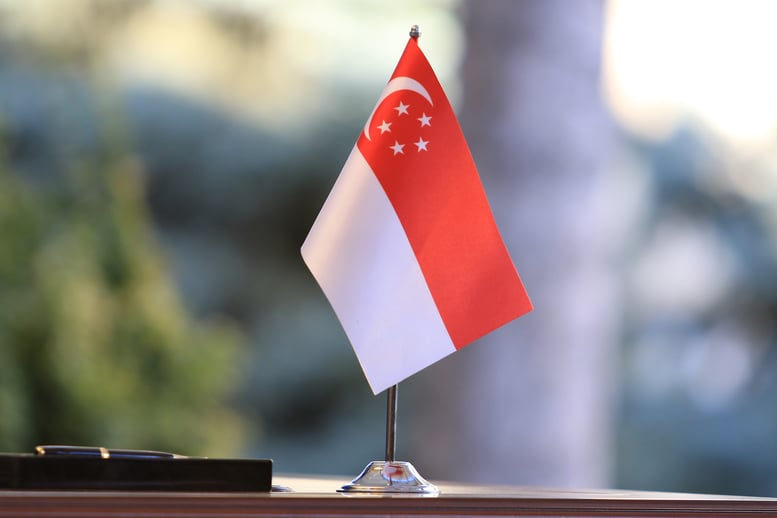
Singapore's ministers had not had a pay rise in 15 years. That changed on 8 September 2026, when Prime Minister Lawrence Wong told Parliament that the Government would adopt in full the recommendations of an independent review committee, lifting his own benchmark salary by 64%, from $2.2 million to $3.6 million a year. That makes him one of the highest-paid heads of government anywhere, earning more than seven times the UK Prime Minister's salary. A junior minister's benchmark rises to $1.8 million. The changes take effect from 15 October 2026, though existing office holders will first receive a one-off adjustment of up to 9%, subject to performance, rather than jumping straight to the new benchmark.
None of that is really the interesting part, at least not for Singapore's own high earners. The number worth sitting with is the one behind the number: the benchmark itself. Since 2012, ministerial pay has been pegged to the median income of the top 1,000 Singapore citizen earners across all professions, discounted by 40 per cent. Gillian Koh of the National University of Singapore's Institute of Policy Studies described that discount as meant to "reflect the commitment to public service which is maintained." According to the Ministry of Finance's own reply to a parliamentary question, that median sat at $2.9 million for the Year of Assessment 2023, with the top 1,000 earners ranging from $2.4 million at the 25th percentile to $4.5 million at the 75th.
Wong himself was candid about how sensitive the topic remains. "This is not just a matter of pay," he told Parliament, in a country where the median worker still takes home just $5,775 a month.
The Benchmark, in Numbers
The gap between that median wage and the earners who set the ministerial pay scale is the real story. Here is how the income ladder actually looks, drawn from official and IRAS-derived data:
| Percentile | Approx. Annual Income | What It Typically Looks Like |
|---|---|---|
| Median (all residents) | ~$69,300 (incl. employer CPF) | The typical Singapore paycheque |
| Top 10% | ~$191,000 – $298,000 | Senior manager, established professional |
| Top 1% | ~$696,000 – $919,000 | Director-level, MD track, senior partner |
| Top 1,000 earners (median) | $2.9 million | The ministerial salary benchmark |
Figures compiled from Ministry of Finance parliamentary data, Ministry of Manpower labour force statistics, and IRAS-derived income distribution estimates. Ranges reflect differing methodologies across sources.
The spread matters more than any single figure on it. A professional earning $300,000 a year, genuinely comfortable by any reasonable standard and sitting inside Singapore's top 1 per cent, is still less than a tenth of the way to the ministerial benchmark. That says less about ministers and more about how concentrated the very top of Singapore's income distribution has become, driven largely by bonus cycles in finance, private equity and law.
Why This Actually Matters Right Now
The ministerial pay debate happens to land in the same quarter as two changes that touch high-earning professionals far more directly.
1. Budget 2026's salary thresholds are already reshaping hiring. From January 2027, the minimum qualifying salary for new Employment Pass applicants rises to $6,000 a month ($6,600 in financial services), while the Local Qualifying Salary, the wage that counts a local hire as a "full head" against a firm's foreign worker quota, climbs to $1,800 from July 2026. Anyone managing a team or a headcount budget has a real 2027 payroll line to plan for now.
2. The SRS and CPF top-up deadline is closing. Contributions to a Supplementary Retirement Scheme account must be made by 31 December 2026 to count toward Year of Assessment 2027 relief, capped at $15,300 a year. CPF cash top-ups under the Retirement Sum Topping-Up Scheme offer a further $8,000 in relief for topping up one's own account, and another $8,000 for an eligible family member, subject to the overall $80,000 personal tax relief cap. For someone with $160,000 in chargeable income, topping up the full $16,000 across both schemes saves roughly $2,400 in tax at current YA2026 rates, on top of the 4 per cent per annum CPF interest, or whatever an SRS portfolio returns.
Three things worth doing before the year turns:
- Check your own percentile, honestly. Comfortable is not the same as top 1 per cent, and neither guarantees it translates into net worth. Income and wealth are different games, and this month's headlines are a decent excuse to run the numbers properly rather than guess.
- Model the SRS-versus-CPF trade-off before 31 December, not after. SRS money can be invested and withdrawn earlier, with a penalty. CPF top-ups are locked in but compound at a guaranteed rate.
- If hiring or managing a budget, price in the 2027 salary floors now. A "salary cliff" is coming for mid-tier staff sitting near the new EP and LQS thresholds, and the budgets set today will feel it first.
None of this is really about ministers. It is about what gets revealed when a government has to publicly justify a number: how far the actual top of Singapore's income pyramid sits from what most people, even genuinely high-earning ones, would call "doing well." The debate over $3.6 million will fade by October. The tax deadline and the 2027 salary floor will not.
References
- Ministry of Finance, "Statistics on Total Employment and Trade Income of Top 1000 Earners" (mof.gov.sg)
- NBC News, "Singaporean prime minister, world's highest-paid leader, gets a 64% pay bump" (nbcnews.com)
- CNN Business, "The world's best-paid politician is getting a $1 million pay rise" (cnn.com)
- ABC News, "Singapore's ministers get a bump to already world-leading salaries" (abc.net.au)
- New Straits Times, "Singapore PM proposes big salary increase for ministers" (nst.com.my)
- IRAS, "SRS contributions and tax relief" (iras.gov.sg)
- IRAS, "Central Provident Fund (CPF) Cash Top-up Relief" (iras.gov.sg)
- TallRock Capital, "Singapore Budget 2026: 3 High-Impact Shifts for Professionals and Investors" (tallrockcapital.com)
Let us know what you think about this topic, and what do you want to hear next.
You can now be our community contributor and make a pitch to have your favourite personality be on our show.
Join our community group and drop us your insights on this topic.


Let us know what you think of this post