
-3.png?width=50&name=Square%20(2)-3.png)

TL;DR:
-
The big three banks slid because of surging bond yields, profit-taking after record highs and a broker downgrade of OCBC, not because of a reported earnings collapse.
-
Dividend yields still look decent against Singapore Savings Bonds, but yields are estimates and valuations differ widely.
-
Q3 results and the MAS review are the next tests.
DBS, OCBC and UOB shares are falling mainly because global bond yields have jumped, investors are taking profits after a strong run, and Citi downgraded OCBC to "sell". The STI dropped 3.5% on 8 October, its biggest one-day fall since April 2025. Fundamentals have not visibly broken. Expectations and valuations have reset.
-jpg-1.jpeg?width=7360&height=4912&name=singapore-downtown-skyline-with-the-supreme-court-2026-09-22-03-17-47-utc%20(1)-jpg-1.jpeg)
Why are Singapore bank shares falling?
Three forces are working at once.
- Rising yields. The US 10-year Treasury yield reached 5.32% on 7 October, after the Fed raised rates by 0.25 percentage points in September. Higher yields compete with bank dividends and can reduce the value of banks' bond holdings. The KBW Nasdaq Bank Index had fallen 12.3% from mid-August to 8 October, so this is a global bank sell-off, not only a local one.
- Profit-taking. DBS and OCBC hit record highs in early September, and UOB peaked in July. Investors sitting on large gains have reasons to sell, which can amplify a drop.
- A broker downgrade. Citi cut OCBC to "sell" with a S$27.50 target, reportedly after forecasting flat year-on-year Q3 2026 earnings. Reports differ on the exact day of the call. On 7 October, OCBC fell 5.9% to S$30.30, while DBS fell 1.36% and UOB 2.93%, per AsiaOne.
Jefferies framed the drop as being about expectations and valuation rather than weaker fundamentals. Brokers are split: RHB reportedly calls OCBC a top pick, while Citi is bearish. Opinions are not facts, so read them as inputs, not instructions.
Are the dividend yields still worth it?
Based on FactSet estimates cited by Growbeansprout on 8 October, forecast FY26 dividend yields are about 4.5% for DBS, 4.4% for UOB and 3.7% for OCBC. Price-to-book ratios differ a lot: DBS 2.87x, OCBC 1.94x and UOB 1.20x.
For context, the Singapore Savings Bond for November 2026 starts at a 1.67% first-year rate, with a 2.45% ten-year average, as The Financial Coconut's SSB breakdown explains. The latest 6-month T-bill cut-off yield was 1.92%.
That gap looks attractive, but compare carefully. SSBs and T-bills are government-backed and keep your capital intact. Bank dividends are forecasts, can be cut, and come with share price risk, as this week shows. A higher yield is compensation for taking that risk, not a free lunch.
How could the MAS review on 14 October affect the banks?
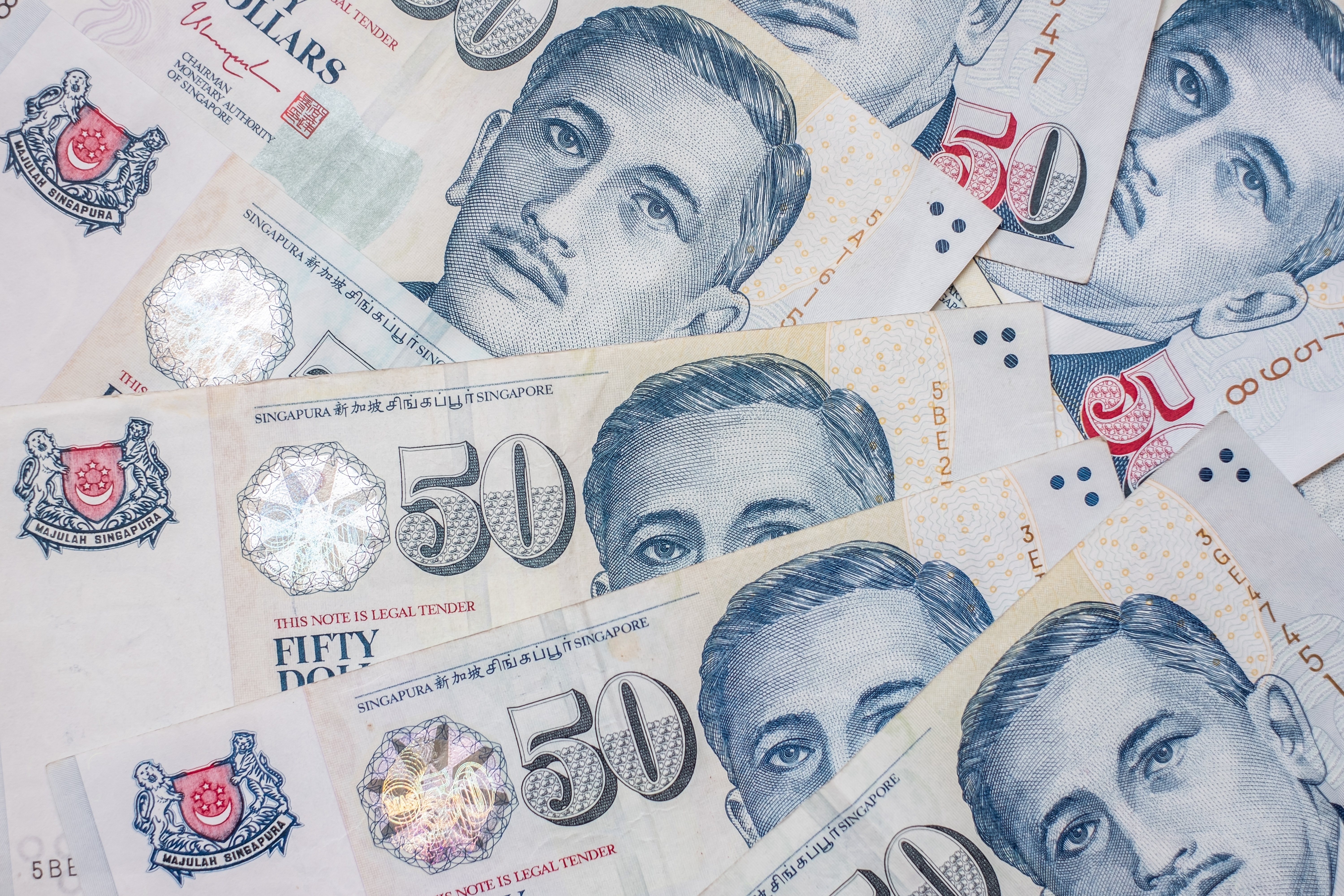
MAS reviews policy on Wednesday, 14 October. All 10 analysts in a Reuters poll expect tightening. MAS tightened in April and again "very slightly" in July. Barclays expects a 25 basis point rise in the slope of the exchange rate band, and DBS Group Research also expects a slight slope increase, with the band's width and centre unchanged.
Core inflation was 2.2% and headline inflation 2.3% in August. Tightening works by letting the Singapore dollar strengthen, which dampens imported inflation.
What this means for banks is debated. Some analysts argue that tighter conditions can lift interest margins, while Citi's OCBC call reportedly cites margin pressure from lower SORA rates. If you hold floating-rate loans, watch your repayments too. Treat all of this as scenarios, not predictions.

What should investors watch next?
- Bond yields. Stabilisation would ease pressure on bank valuations.
- Q3 results. DBS and OCBC are reportedly due in early November. Look at net interest margins, wealth fees and credit costs.
- Payout sustainability. Check payout ratios and capital positions, not just headline yields.
- Your concentration. If banks already dominate your portfolio through direct holdings, STI ETFs and REITs, a sell-off hits harder.
This is general education, not personal financial advice. Your own time horizon, income needs and risk tolerance matter more than any broker call.
FAQ
-
Why are DBS, OCBC and UOB shares dropping in October 2026?
Higher global bond yields, profit-taking after record highs, and a Citi downgrade of OCBC have combined to push prices down. -
Are Singapore bank dividends safe?
Dividends are never guaranteed. Estimated yields of roughly 3.7% to 4.5% for FY26 come from analyst forecasts and can change. -
Is the MAS review good or bad for banks?
Analysts disagree. Tightening can support the Singapore dollar and cool inflation, but its effect on bank margins is debated. -
Are bank shares better than Singapore Savings Bonds?
They are different products. Bonds protect capital, while shares offer higher potential income with price risk.
Closing
The banks' slide is a reminder that high yields come with volatility. For more investor-focused breakdowns, explore Chills with TFC and the Invest hub, or follow the community through the TFC link hub.
References
- AsiaOne, DBS, OCBC and UOB shares have fallen. Is it a good time to buy?
- Reuters via Investing.com, Singapore poised to tighten monetary policy amid strong growth and rising inflation risks
- FXStreet, Singapore: Policy slope tightening view (DBS)
- The Kopi Notes, DBS, OCBC and UOB: October 2026 Bank Selloff
- The Financial Coconut, Singapore Savings Bond November 2026
Let us know what you think about this topic, and what do you want to hear next.
You can now be our community contributor and make a pitch to have your favourite personality be on our show.
Join our community group and drop us your insights on this topic.






Let us know what you think of this post