
-3.png?width=50&name=Square%20(2)-3.png)

TL;DR
-
A dormant 2006 rule requiring Malaysian tuition centres to hold 30% Bumiputera equity went viral in mid-September 2026, threatening licence renewals from 2027 for centres that didn't comply.
-
On 21 September, four days after the story broke, Malaysia's Education Ministry confirmed it is dropping the requirement entirely, following discussions with the Ministry of Investment, Trade and Industry (MITI).
-
It's a fast reversal by policy standards, and a useful case study in how quickly a "sleeper" regulation can resurface and get undone once it hits public scrutiny.
-
But the reversal only touches the Bumiputera equity condition. It says nothing about the separate rule barring foreign equity in standard tuition centres, which is the part that actually matters if you're a Singaporean with money or ownership in a Malaysian tuition, enrichment or franchise business.
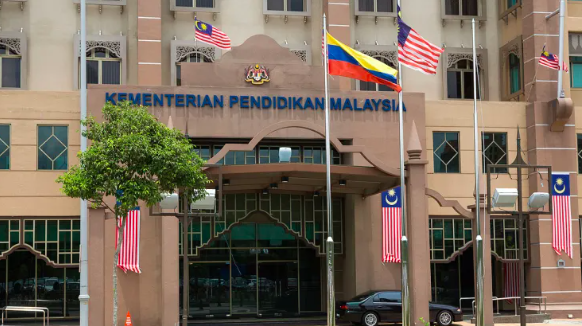
Malaysia's Education Ministry confirmed on the evening of 21 September 2026 that private education centres under its purview will no longer be required to hold 30% Bumiputera equity. The ministry said the decision followed discussions with the Ministry of Investment, Trade and Industry, and that the adjustment was made "to fulfil the education sector's current needs and ensure that room for entry remains open to all who want to contribute to the development of the nation's education sector."
It's a striking turnaround. Four days earlier, most people didn't know the rule existed at all.
How this unfolded, day by day
The equity condition itself isn't new. It was embedded into the registration rules for private education centres back in 2006, under then-Education Minister Hishamuddin Hussein, as part of the Private Education Institutions Policy Book. For nearly two decades it sat largely unenforced and unnoticed.
That changed on 17 September, when local media reported that tuition centres failing to meet the 30% Bumiputera equity threshold risked losing their operating licences at renewal from 2027, a detail that had first surfaced via a Facebook post from an Ipoh community page sharing a Ministry of Education registration table.
By 18-19 September, Petaling Jaya MP Lee Chean Chung was publicly pressing the ministry to explain the basis for the requirement and clarify whether it would apply retroactively to centres already operating legally, a question the ministry never directly answered. The same days brought pointed criticism from a parents' advocacy group and an independent scholar, who called the policy "absurd" and warned it risked racialising education without genuinely building Bumiputera entrepreneurship, while MIC's C Sivaraj separately raised concerns about forcing established operators, many of them built over decades on personal capital, to surrender equity.
By 20 September, the ministry announced it would submit a proposal to Cabinet to review the ownership rules "next week." It didn't take a week. The reversal came the very next evening.

What actually changed, and what didn't
The confirmed change is specific: the 30% Bumiputera equity condition for tuition centres is gone.
What the ministry's statement does not address is the separate, longer-standing rule on foreign equity.
Under the Ministry of Education's registration framework, tuition centres structured as sole proprietorships or enterprises have not permitted foreign equity at all, and a related provision, Section 6.3.2 of the ministry's guideline as cited by a former deputy education minister, has been read to require 100% Malaysian citizen ownership even for tuition centres incorporated as Sdn Bhd. Neither of those has been mentioned in this week's announcement.
That distinction matters more to Singaporean readers than the headline itself. The Bumiputera-equity fight was about how ownership is split among Malaysians. The foreign-equity bar is about whether a non-Malaysian, including a Singaporean, can hold equity in a Malaysian tuition centre in the first place. Those are two different gates, and this week's news only opened one of them.
| Ownership question | Status as of 21 September 2026 |
|---|---|
| 30% Bumiputera equity for tuition centres | Dropped. Confirmed by the Education Ministry. |
| 100% Malaysian citizen ownership for tuition centres (Sdn Bhd and enterprise) | Unchanged, not addressed in this week's statement |
| Foreign equity for sole proprietorship/enterprise tuition centres | Still not permitted, per the registration framework |
| Foreign equity for language/skills/training centres (Sdn Bhd) | Permitted, within limits set by Malaysia's Free Trade Agreements |
For anyone running or investing in a Malaysian tuition business, the branch-mirroring requirement also still stands: each branch of a centre is expected to replicate the parent's ownership structure, which matters a great deal if the plan involves franchising across multiple locations. TFC's conversation with cross-border experts including Hossan Leong on running dual Singapore-Malaysia businesses is worth a listen for the operational side of this, well beyond the regulatory table.
Why the speed of this reversal is the real lesson
Policy sleepers like this don't announce themselves. This one sat dormant for twenty years, got surfaced by a community Facebook post, and was reversed by Cabinet-adjacent ministries within four days of hitting mainstream coverage, once enough operators, MPs and advocacy groups made noise. That's a useful pattern to keep in mind for anyone with capital or ownership stakes in Malaysia: the rule that gets you isn't usually a brand-new announcement, it's an old, unenforced clause that someone finally reads properly.
Franchise lawyer Damien Yeo made a related point on TFC's Business Show: many operators unknowingly cross legal lines they didn't know existed until enforcement catches up with them, simply because nobody checked the fine print at the point of setting up.
What Singaporean founders and investors should actually do now
- Don't treat this reversal as clearance to invest in a Malaysian tuition centre as a foreign shareholder. The Bumiputera condition is gone, but the separate bar on foreign equity in standard tuition centres has not been publicly addressed.
- Confirm your business's registration category with KPM. A "language, skills or training centre" Sdn Bhd can carry foreign equity within FTA limits; a "tuition centre" cannot, regardless of this week's news.
- Get Malaysian corporate counsel to review your shareholding structure against the current registration framework, especially if you're using a nominee, trust, or indirect structure to hold an interest in a Malaysian education business.
- If franchising is part of your plan, treat licensing-versus-franchising classification as a separate legal question from ownership equity. Getting this wrong carries its own compliance risk under Malaysia's Franchise Act, independent of the equity rules.
- Watch for whether the ministry clarifies the foreign-equity question next, now that the Bumiputera issue has moved quickly. Given how fast this week's reversal happened, a follow-up statement addressing foreign ownership isn't out of the question.
The headline risk that was dominating Malaysian headlines this week is resolved. The quieter one, whether a Singaporean can actually hold equity in a Malaysian tuition centre at all, is still sitting exactly where it was before any of this started.
More From The Financial Coconut
- Why Malaysia Is the Next Big Thing in Franchising - TFC Business Show's conversation with the Malaysia Franchise Association on the state of cross-border franchising in 2026.
- General site: thefinancialcoconut.com
- YouTube: @TheFinancialCoconutTFC
References
- Free Malaysia Today, Govt to drop Bumiputera equity rule for tuition centres
- The Rakyat Post, 20-Year-Old Policy, 2027 Deadline: Why Tuition Centres Say The 30% Equity Rule Gets It Wrong
- Free Malaysia Today, 30% equity for tuition centres detrimental to students, ministry and national policy
- Free Malaysia Today, Education ministry to propose review of tuition centre ownership rules
- Free Malaysia Today, Drop 'absurd' Bumiputera equity rule for tuition centres, govt urged
- The Vibes, 2006 policy may force tuition centres to possess 30% Bumi equity
- The Rakyat Post, Tuition Centre Owners Told To Find Bumi Partners By 2027, Or Lose Their Licence
- The Financial Coconut, Small Capital Businesses in Malaysia, a Great Corporate Exit Plan
- The Financial Coconut, Is Your Franchise Actually Illegal?
- The Financial Coconut, Why Malaysia Is the Next Big Thing in Franchising
Let us know what you think about this topic, and what do you want to hear next.
You can now be our community contributor and make a pitch to have your favourite personality be on our show.
Join our community group and drop us your insights on this topic.






Let us know what you think of this post