
-3.png?width=50&name=Square%20(2)-3.png)

We grew up being told a simple story: study hard, work hard, and you’ll move up. Inheritocracy is the word historian and generations expert Eliza Filby uses when that story stops matching reality – when your life chances depend less on what you do, and more on who your parents are and what they own.
At the heart of inheritocracy is the rise of the “Bank of Mum and Dad”. Filby’s work shows that parental support today is no longer a one‑off angbao or occasional bailout. It’s a whole system of financial scaffolding: paying for or subsidising university, helping with rent in expensive cities, funding overseas studies, stumping up house deposits, bailing children out of debt, and providing free childcare so their adult kids can work, save or build businesses.
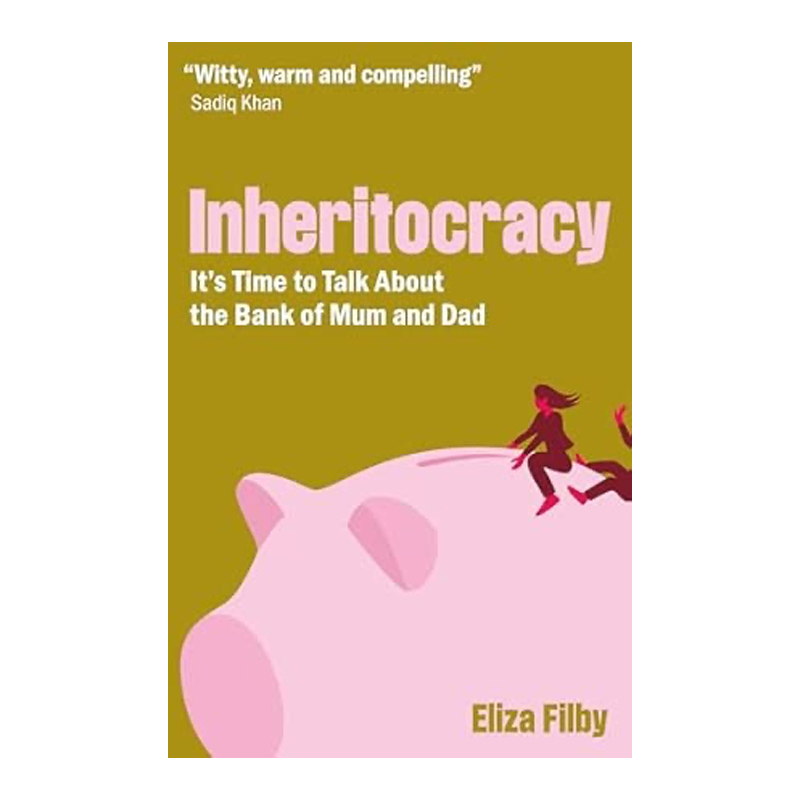
On the surface, we still live in societies that look meritocratic: the same exams, the same university admission processes, the same job interviews. But Filby argues that underneath this formal structure, parental capital quietly rewrites the script. Two young adults can have similar intelligence, grades and work ethic – yet their risk tolerance and options diverge sharply depending on whether there is a financial safety net at home.
If you have access to the Bank of Mum and Dad, you can:
-
Take unpaid or low‑paid internships to break into elite industries.
-
Relocate to global cities where the best jobs are, even if rents are brutal.
-
Start a business or join a startup with a low initial salary.
-
Buy a home earlier, locking in housing security and asset growth.
If you don’t, you’re pushed toward a different optimisation problem:
-
Prioritise stable, immediate income over long‑term upside.
-
Stay in cheaper locations, even if opportunities are thinner.
-
Delay homeownership, children, or career pivots because there’s no backup plan.

Filby and others note that this isn’t just about the ultra‑rich. Middle‑class families are increasingly funnelling savings into helping adult children cope with housing, education costs and childcare in high‑cost cities. Over time, this turns property and financial assets into a kind of “hereditary infrastructure” that shapes who can accumulate wealth and who remains stuck renting and juggling bills.

That’s where inheritocracy becomes dangerous: it hardens class lines across generations. When getting on the property ladder effectively requires parents who already own property, mobility slows down. Wealth begins to compound within certain families, while others are locked out, even if they “did everything right”.
For places like Singapore, Filby’s lens is especially uncomfortable. Singapore has no inheritance tax, a tax system that is light on wealth, and a model where household wealth is heavily concentrated in property. Policymakers have already warned about “hereditary meritocracy” and the risks of rising wealth inequality driven by asset prices. If family balance sheets increasingly decide who can buy, who can risk, and who can rest, then the question isn’t just “Are we fair?” but “Are we slowly turning into an inheritocracy too?”
Inheritocracy doesn’t mean merit is dead. It means merit is no longer enough on its own – and pretending otherwise may be the biggest lie we keep telling the next generation.
This is an AI-powered article, curated by The Financial Coconut.
Source consulted:
-
Eliza Filby, “The Inheritocracy in 5 Charts: What REALLY Happened to Social Mobility”.
-
Eliza Filby, “Why I wrote Inheritocracy”.
Let us know what you think about this topic, and what do you want to hear next.
You can now be our community contributor and make a pitch to have your favourite personality be on our show.
Join our community group and drop us your insights on this topic.







Let us know what you think of this post