
-3.png?width=50&name=Square%20(2)-3.png)

TL;DR
-
The Middle East is not a distant problem. With over 70% of Singapore's oil sourced from the region and 45% of its LNG coming from Qatar alone, the Strait of Hormuz closure is a direct hit to Singapore's economy.
-
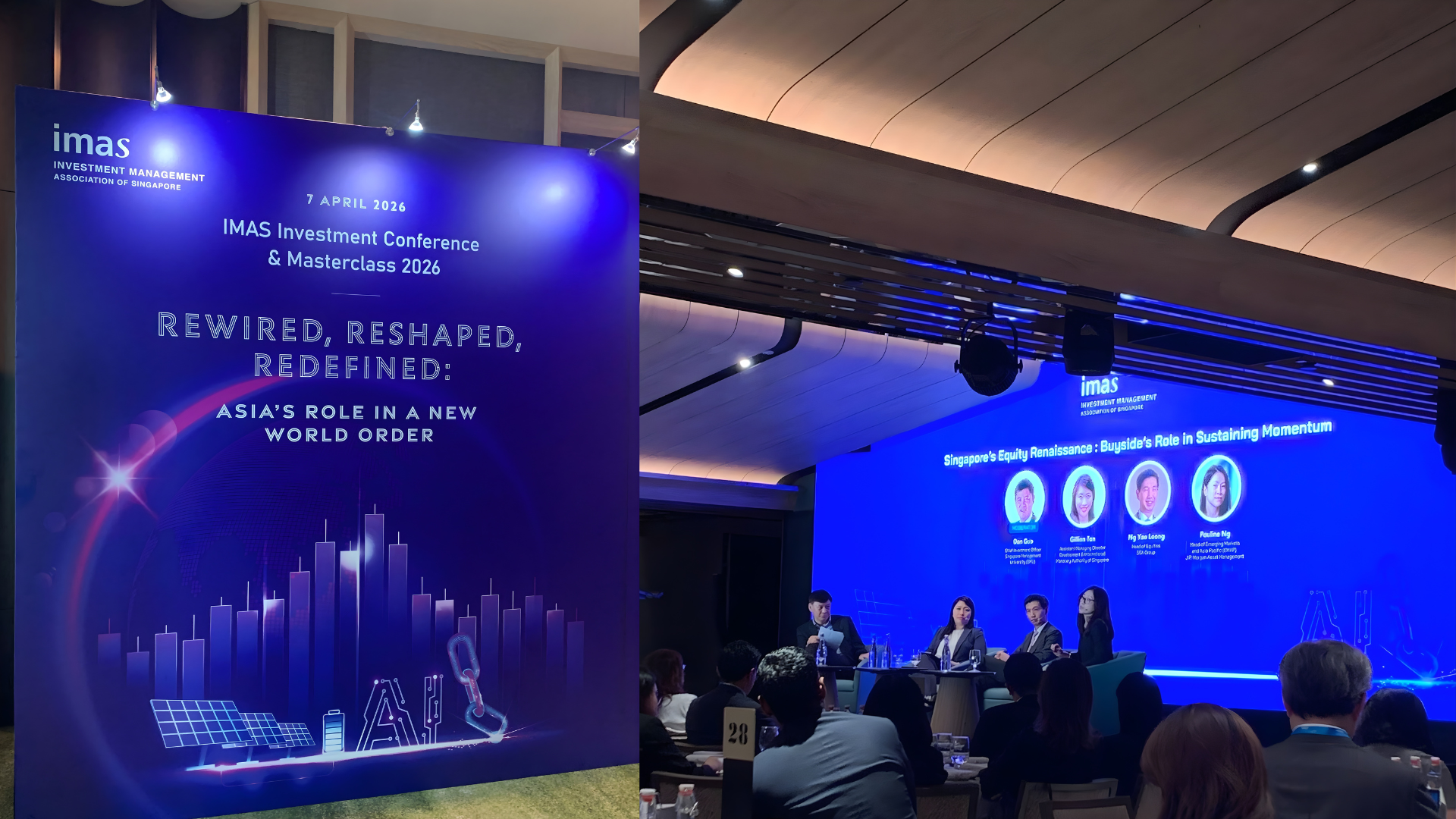
At IMAS Conference, Dr. Vivian Balakrishnan, Minister for Foreign Affairs, summed it up in three blunt points: the world is more violent; choke points still control physical trade; and no country can be an oasis if its region is on fire.
-
For Singapore's commercial community, ignoring this is no longer an option.
The Three Points You Cannot Afford to Forget
At a recent high-level financial forum, a senior Singaporean official cut through the noise and told the room to remember just three things:
- We live in a more volatile, violent world.
- Choke points and physical delivery still matter; derivatives and financial instruments cannot replace them.
- You cannot be an isolated, stable oasis if your region is aflame.
These are not talking points. In April 2026, they are operational realities.
Why the World Got More Dangerous
The short explanation: we are in a transition between world orders, and transitions are dangerous.
The late American scholar Louis Henkin once described the old world as one where "almost all nations observe almost all principles of international law and almost all of their obligations almost all the time." That almost is doing less and less work today.
Big powers now operate with shorter time horizons, narrower definitions of national interest, and far less inhibition about using force. Once that logic takes hold at the top, smaller powers recalibrate too, each one calculating what leverage it can use for immediate gain. The result is a structurally less predictable operating environment for every business that relies on global trade.
The Choke Point That Brought Asia to Its Knees
Here is what happened, and why it matters directly to Singapore.
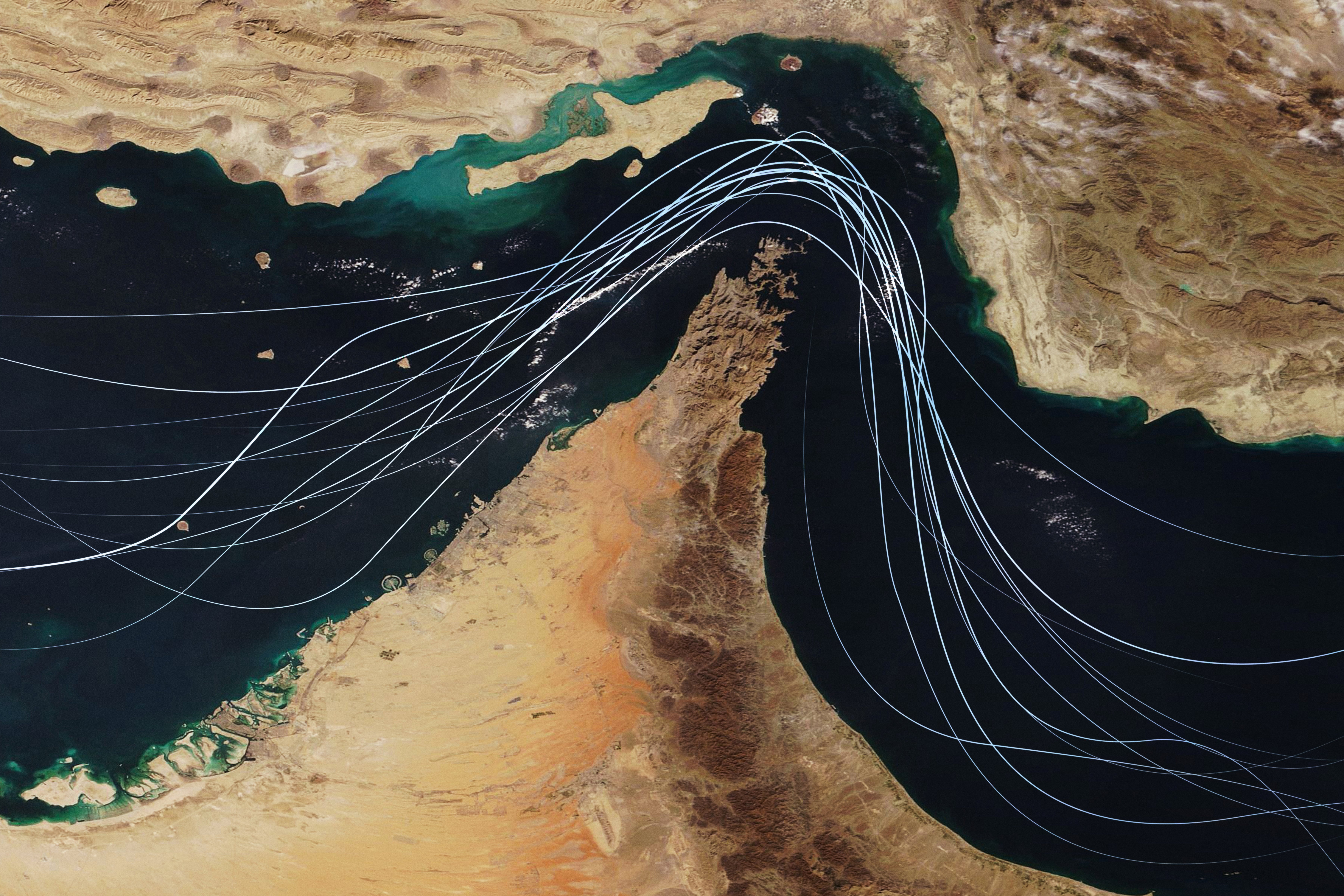
On 2 March 2026, Iran closed the Strait of Hormuz following US-Israeli strikes. Within days:
- At least 150 tankers anchored outside the strait; MSC, Maersk and Hapag-Lloyd suspended transits; Brent crude jumped 10–13% in initial trading.
- Singapore pump prices rose across all octane grades. The Straits Times Index declined 1.5%.
- Several Southeast Asia-based refineries, including facilities in Singapore and Malaysia, cut back output due to constrained crude availability.
The numbers behind the shock are stark. In 2024, roughly 84% of crude oil and 83% of LNG moving through the Strait of Hormuz was destined for Asian markets.
This is not America's problem or Europe's problem. It is Asia's, and Singapore's, first.More than 70% of Singapore's oil came from the Middle East in 2025, while 45% of its LNG imports came from Qatar alone.
When QatarEnergy suspended LNG exports for the first time in 30 years after its facilities were struck, Singapore had nowhere else to immediately turn.
Singapore's Exposure by Sector
| Sector | Immediate Risk |
|---|---|
| Refining & Petrochemicals | Crude supply constrained; output already cut |
| Shipping & Logistics | Suspended transits; rerouting adds 10–15 days, higher freight costs |
| Manufacturing | Energy input costs rising, cascading through supply chains |
| Financial Markets | STI fell 1.5% within days of the Strait closure |
| Consumer-facing businesses | Fuel, utilities and food inflation already feeding through |
The Houthis had already proven the principle in the Red Sea: you do not need to sink every ship. You just need the insurance brokers to refuse coverage. The Strait closure confirmed it at a far greater scale.
Asia's Upside Is Real, But It Has Conditions
Despite all this, the long-term case for Asia remains compelling. ASEAN's collective GDP is approaching the $4 trillion mark, a tier that puts it alongside India as one of the world's key economic engines. Southeast Asia is set to become a net LNG importer by 2032, with energy demand forecast to surge 182% over the next decade.
The growth story is intact. But it rests on two prerequisites:1. Peace and stability across the region. No amount of infrastructure, talent or capital can compensate for sustained insecurity. Supply chains require predictability. Investors require confidence. Both evaporate under prolonged conflict.
2. Deeper regional integration. Southeast Asia, with its heavier reliance on spot LNG purchasing, is competing for leftovers when global supply tightens, while Japan and South Korea, which locked in long-term contracts and strategic reserves decades ago, absorb the shock far better. The gap is not luck. It is preparation.

What Singapore Is Building, And Why It Matters Now
Singapore has been quietly laying the groundwork for exactly the kind of resilience the region now desperately needs.
- Project Nexus: Singapore's cross-border instant payment platform is expanding into a regional standard, reducing friction in intra-Asian trade and investment.
- FAST-P: The Financing Asia's Transition Partnership, a Singapore-led blended finance initiative, aims to mobilise up to US$5 billion to de-risk and finance green and transition projects across Asia.
- ASEAN Power Grid: Singapore has already started importing renewable energy from Laos via Thailand and Malaysia, and the Energy Market Authority projects expanding such imports to 4,000 MW by 2035. The ADB and World Bank backed this with an initial financing commitment of US$2.5 billion in October 2025.
"The current situation could be interpreted as a wake-up call for Southeast Asian countries to reshape their energy landscape by increasing the share of clean technologies while strengthening domestic energy security," said Dinita Setyawati, senior energy policy analyst for Southeast Asia at Ember.
None of this is finished. But the direction is clear, and the crisis has sharply accelerated the urgency.
What Singapore Businesses Should Do Right Now
This is not a moment for observation. It is a moment for action.
- Audit your energy exposure. How much of your cost base is directly or indirectly tied to oil and gas prices? Model scenarios at $100, $130 and higher per barrel.
- Diversify supply chains regionally. Intra-ASEAN corridors are becoming more strategic, not less, as global supply chains fragment. If you have not mapped your regional exposure, now is the time.
- Accelerate energy efficiency and transition planning. Energy analysts say accelerating the shift to domestically generated clean energy offers the most sustainable hedge against geopolitical risk and fossil fuel price volatility. This is no longer a CSR consideration; it is a margin consideration.
- Protect your reputation for reliability. In a world where fewer actors are honouring contracts and commitments, those who do are differentiated. As the official noted, how you behave in a crisis "has got profound impact to have your standing and in fact your prospects after the crisis is over."
- Do not panic-plan in isolation. Singapore has fiscal reserves that provide a genuine cushion. The 1973 and 2022 episodes both produced lasting policy upgrades, more rigorous stockpile management, fuel efficiency programmes, and diversified trade relationships. Work with, not around, the policy frameworks being put in place.
- Check out Singapore government's response to the energy crisis
The comfortable assumptions of the past 80 years are gone. Choke points are real. Geography still matters. And Singapore, for all its efficiency, reserves and governance quality, cannot decouple from the region it sits in.
The question is not whether these forces are real. They are. The question is whether Singapore's business community moves fast enough to get ahead of them, or waits until the next crisis to act.
References
- The China-Global South Project, "How the Strait of Hormuz Disruption Exposed Southeast Asia's Fragile LNG Strategy"
- IMAS Conference,
- Seatrade Maritime, "The Strait of Hormuz Crisis and its Devastating Impact on Asia-Gulf Trade"
- Maxthon Blog, "Singapore's Energy Security Under Siege"
- The Diplomat, "Southeast Asia Reels From Middle East Oil Supply Shortages"
- Eco-Business, "Wake-up call for ASEAN energy security"
- Green Central Banking, "Clean energy, not LNG, is Asia's best hedge against energy shocks"
- Monetary Authority of Singapore, "Singapore and UK Collaborate on Energy Transition and Sustainable Infrastructure Investments in Southeast Asia"
- ASEAN, "ADB and World Bank Group Launch the ASEAN Power Grid Financing Initiative"
- ASEAN-BAC, "Unlocking Regional Power Trade: Policy Pathways for the ASEAN Power Grid
Let us know what you think about this topic, and what do you want to hear next.
You can now be our community contributor and make a pitch to have your favourite personality be on our show.
Join our community group and drop us your insights on this topic.


Let us know what you think of this post