
-3.png?width=50&name=Square%20(2)-3.png)

From 24 August 2026, Singapore's HDB income ceiling for BTO flats rose from $14,000 to $16,000 a month, the first change since 2019. Less discussed: this landed the same year HDB resale prices fell for two consecutive quarters, their first back-to-back decline in nearly seven years. That timing is worth unpacking before you read the hike as simple good news.
What changed in the HDB income ceiling?
Announced at the National Day Rally on 23 August, BTO ceilings rose from $14,000 to $16,000, EC ceilings from $16,000 to $18,000, and the singles (35 and above) ceiling from $7,000 to $8,000, all effective 24 August 2026. The change also applies to resale flats bought with a CPF Housing Grant or HDB loan. It is the first move in seven years, catching a ceiling that stood still while wages climbed.
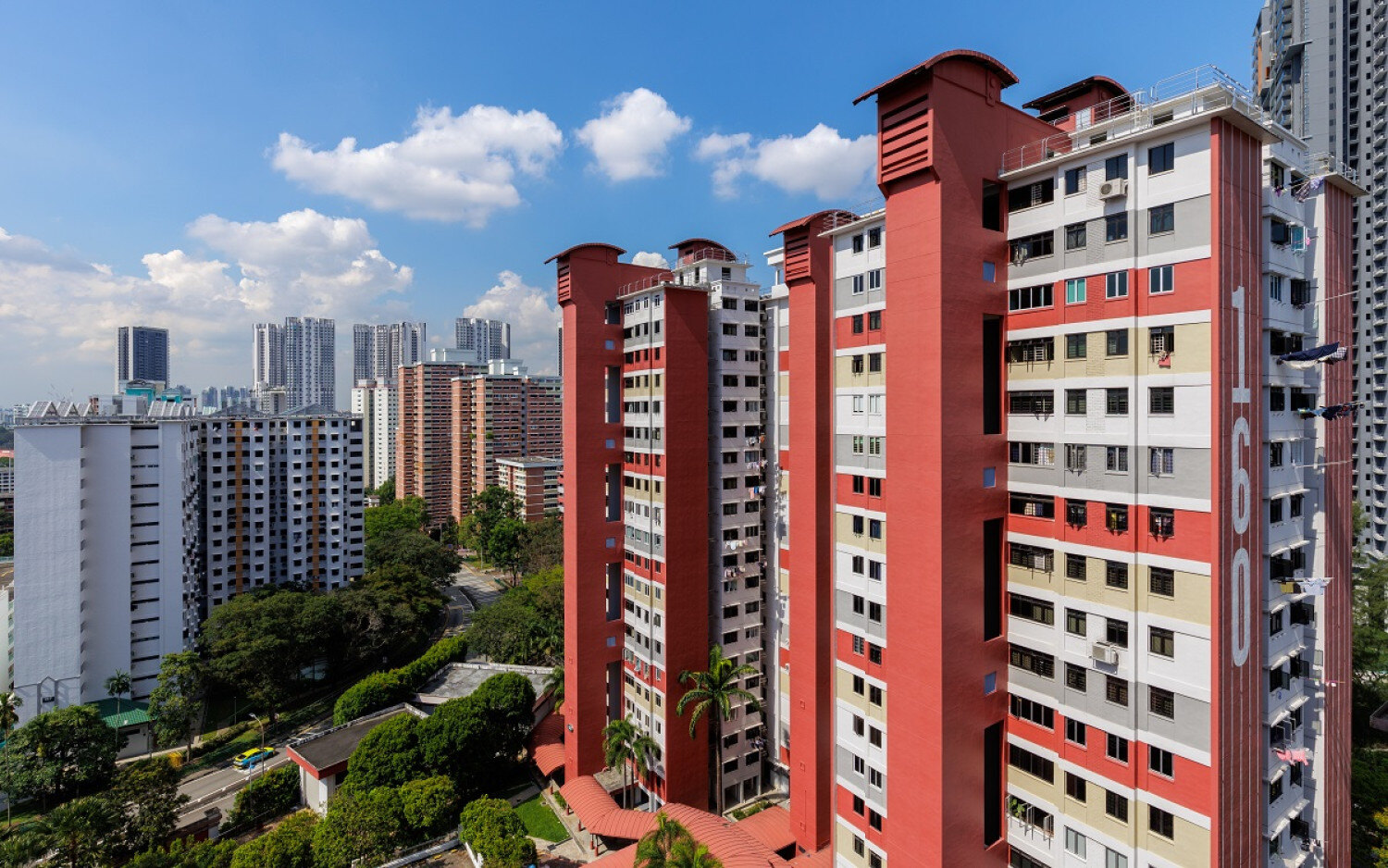
Why did this land just as resale prices started falling?
Here is the coincidence. HDB's flash estimates show the Resale Price Index slipped to 203.4 in the first quarter of 2026, down 0.1%, then fell further to 202.7 in the second quarter, down another 0.3%. That is the first back-to-back quarterly decline since a run of four straight drops from 2018 to 2019. Full-year resale growth had already slowed from 9.7% in 2024 to 2.9% in 2025, the weakest pace since 2019.
Property agency ERA attributes the softening mainly to the 15-month wait-out period for private property sellers and a record wave of BTO flats hitting Minimum Occupation Period, not to any ceiling review. The two stories run on separate tracks that happen to intersect this year. TFC flagged the ceiling pressure building a year earlier, when a couple earning a combined $14,500 could already find themselves excluded from BTO eligibility despite sitting squarely in the professional middle class, as an earlier look at the 55,000-flat BTO supply pipeline explored. This move addresses that squeeze; it wasn't designed to respond to resale prices.
Is this really about affordability for the average household?
Not quite. Median monthly household market income was $12,446 in 2025, per the Singapore Department of Statistics, well under both the old and new ceilings. The typical household was never near the cutoff. What the ceiling excluded was narrower: dual-income couples whose combined pay had drifted past $14,000 but who weren't earning enough to comfortably absorb private property either, a tension TFC has previously examined in the wider affordability debate. This is a wage catch-up correction for one income band, not a broad affordability intervention.
What should newly eligible buyers do with this?
Resist reading "now eligible" and "resale prices softening" as one combined discount. A BTO flat completes years after you apply, so you're buying against future conditions, not today's resale comparables. If you're eyeing resale instead, a dip of 0.1% and 0.3% is tiny against an index near its all-time high; it's a cooling signal, not a sale. As Chills with TFC discussed with sociologist Teo You Yenn, Singaporeans often feel unease even when the numbers are fine, and the reverse trap applies too: a good-sounding headline can manufacture false confidence just as easily. Anchor decisions to your own timeline and budget, not the coincidence.
If you were previously just above the old ceiling, apply for a fresh HFE letter ahead of the November 2026 BTO exercise, which offers around 7,960 flats across six towns.
In summary
The HDB income ceiling rise to $16,000 for BTO flats and $18,000 for ECs corrects seven years of wage growth outpacing a frozen policy. It arrived the same year resale prices softened for two straight quarters, but the two are separate stories with separate causes. Read the eligibility change on its own terms, not as proof the market has turned in buyers' favour.
For more breakdowns on Singapore's property and policy shifts, follow The Financial Coconut Podcast and community via linkin.bio/thefinancialcoconut.
FAQ
When does the new HDB income ceiling take effect? From 24 August 2026, for households submitting an HFE letter application from that date. The EC ceiling applies to land tenders closing on or after the same date.
Why are HDB resale prices falling in 2026? The Resale Price Index fell 0.1% in the first quarter and 0.3% in the second, the first back-to-back decline in nearly seven years. Analysts attribute this mainly to the 15-month private property seller wait-out period and record BTO flats reaching MOP, not the ceiling change.
Does the higher ceiling affect resale flat buyers too? Yes, if using a CPF Housing Grant or HDB loan. Resale purchases without a grant or loan have no income ceiling.
Should I buy now because eligibility widened and resale prices softened together? Treat them as unrelated signals, not a combined discount. The ceiling reflects wage growth catching up to policy; the resale dip is small against a near-record index.
References
HDB, Flash Estimate of 1st Quarter 2026 Resale Price Index and Upcoming Flat Supply
HDB, Flash Estimate of 2nd Quarter 2026 Resale Price Index and Upcoming Flat Supply
Singapore Department of Statistics, Key Household Income Trends, 2025
ERA Singapore, Commentary on 2Q 2026 HDB Flash Estimates
The Financial Coconut, What 55,000 New BTO Flats by 2027 Mean for Singapore's Property Landscape
The Financial Coconut, What's Worse: Housing Affordability or Curbing Pricey Flats in Singapore?
The Financial Coconut, The Perpetual UNEASE felt by Singaporeans with Money explained [Chills 267 ft Teo You Yenn]
Let us know what you think about this topic, and what do you want to hear next.
You can now be our community contributor and make a pitch to have your favourite personality be on our show.
Join our community group and drop us your insights on this topic.



Let us know what you think of this post