
-Jun-01-2025-06-24-42-9139-PM.png?width=50&name=Square%20(2)-Jun-01-2025-06-24-42-9139-PM.png)

DINKs (dual income, no kids) are in a unique position in the FIRE world. They often have more disposable income and greater flexibility, but they also don’t have children to rely on for caregiving in old age. This changes how they plan for healthcare in retirement: less reliance on family and more emphasis on structured systems, buffers, and buying optionality.
Using the DINK Income Edge Early

During the accumulation phase, many DINK couples take advantage of their higher savings capacity to pre-fund future healthcare costs. Instead of spending on child-related expenses, they direct extra cash into retirement accounts, tax-advantaged health accounts, and a taxable portfolio that is explicitly earmarked to handle premiums, deductibles, and out-of-pocket care.
This early funding provides a solid cushion when it comes to healthcare. DINK couples often choose a more conservative withdrawal rate—say 3–3.5% instead of a hard 4%—because they know they won’t be able to count on informal support from adult children in old age. This larger nest egg allows them to access better facilities, faster medical services, or more in-home care if health issues arise.
Another benefit is the flexibility around work. Many DINK FIRE couples use one partner’s job purely to access employer-subsidised health insurance while the other reduces hours or transitions to part-time or consulting roles. This helps bridge the gap until they can rely on national healthcare schemes or their own portfolio.
Bridging the Pre-65 Healthcare Gap
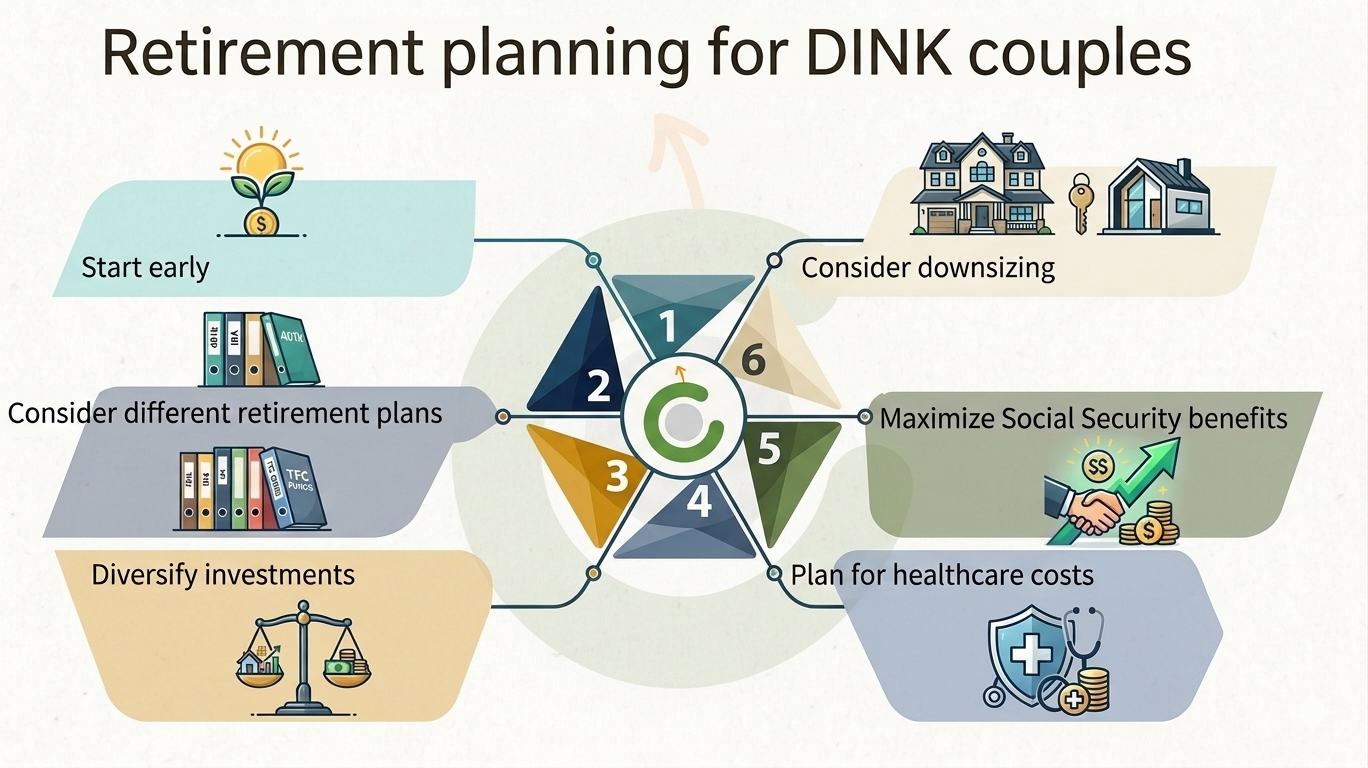
The most challenging period for early retirees is usually the "bridge years"—the time between leaving full-time work and becoming eligible for age-based national schemes. DINKs who retire early typically plan for these years in great detail. Here are some common strategies:
- Keeping income low but not zero to qualify for means-tested subsidies or premium tax credits.
- Choosing high-deductible or mid-tier insurance plans, while building a dedicated cash buffer to cover large medical bills without selling investments in a downturn.
- Budgeting for several years of elevated premiums, while assuming medical inflation will run higher than general inflation.
Since DINKs have no dependents, the couple can often tailor coverage asymmetrically. For instance, the partner with a family history of illness might opt for a more generous plan, while the healthier partner could choose leaner coverage and build a larger personal emergency fund. This approach ensures lower combined premiums while maintaining appropriate coverage for both individuals.
Planning for Long-Term Care Without Children
One major difference between DINKs and parents is their approach to long-term care. Without children to assist with caregiving, DINKs are more likely to rely on professionals for future care, which involves making three key decisions:
1. Buy long-term care insurance or self-insure?
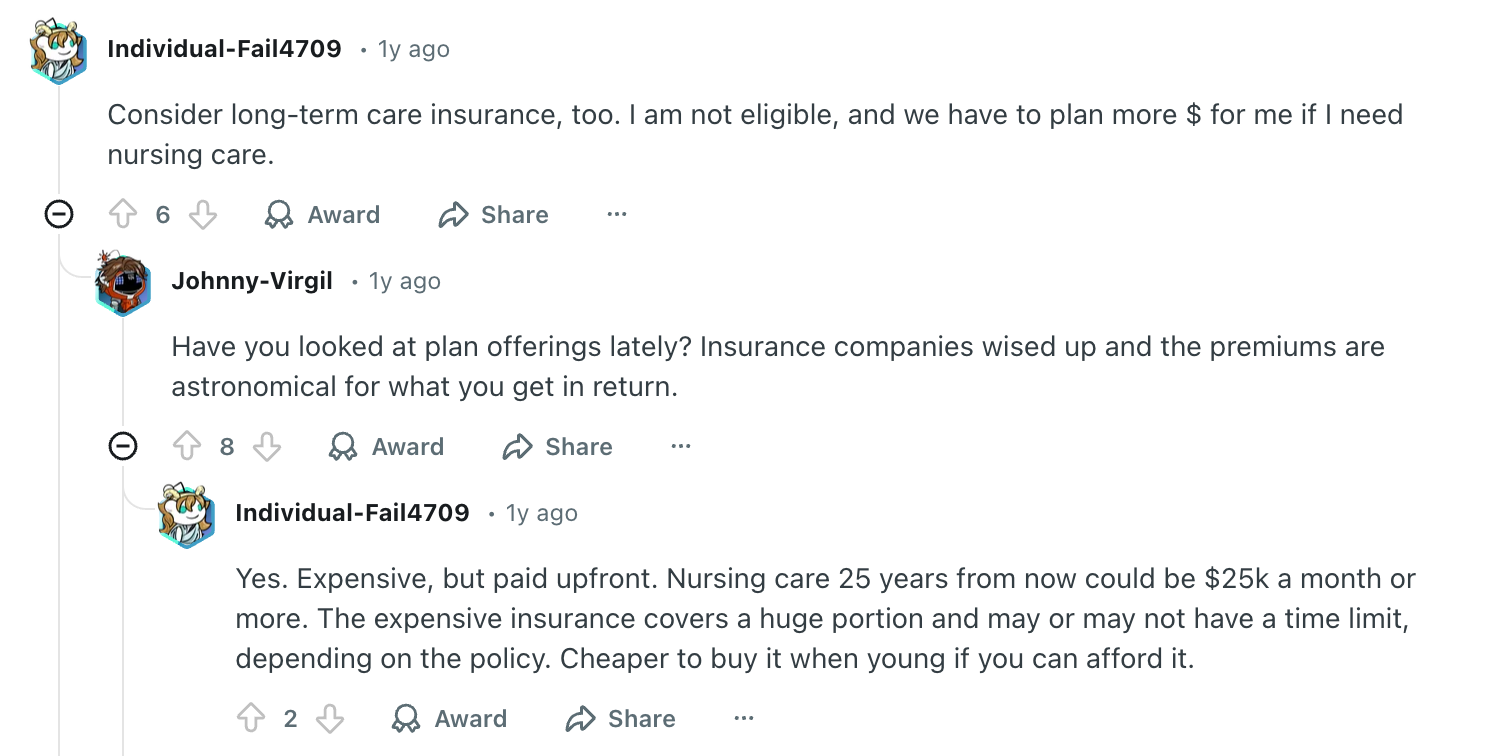
Some DINKs opt for long-term care insurance, particularly to cover nursing homes, memory care, or assisted living. Others are comfortable self-insuring through a larger portfolio. This decision is typically based on risk tolerance, health status, and available savings.
2. Ring-fence wealth for care of the survivor
Many DINKs set aside a portion of their portfolio specifically for the survivor’s care. This “never-touch” money is often invested more conservatively than the rest of their FIRE assets. The aim is to ensure that there is enough to cover long-term care costs, especially if one partner outlives the other by many years.
3. Choose the right location for ageing
Some DINKs base themselves near good hospitals, specialist clinics, or in communities with strong home-care ecosystems. Others consider phased geo-arbitrage—living in a lower-cost area while healthy and moving to a higher-care city or country later when health needs increase.
Legal Structures and Social Backup
Healthcare in retirement isn’t just about money and insurance. Someone has to make decisions for you if you cannot. DINKs therefore place more emphasis on legal documents and social relationships to ensure smooth decision-making:
- Each partner typically grants the other medical power of attorney and creates living wills or advance directives to specify treatment preferences.
- In the absence of children, they often designate at least one trusted friend or extended family member as a backup decision-maker.
- They document practical details, such as doctors, medications, and insurance accounts, so that if one partner declines cognitively, the other can step in seamlessly.
In addition, many DINKs invest in friendships, community groups, or faith-based networks. While these ties cannot replace family in every way, they provide an informal support system for tasks like transport, check-ins, or hospital visits.
A Bigger, Explicit Healthcare Bucket in the FIRE Plan
Finally, DINKs who approach healthcare seriously in their FIRE plan don’t treat it as a generic line item. Instead, they create a separate “healthcare and long-term care” bucket within their FIRE budget. This bucket:
- Assumes higher inflation than the rest of their spending.
- Includes premiums, deductibles, routine care, and a contingency for at least one serious illness for each partner.
- Is sized based on the assumption that paid help, not children, will provide most hands-on care.
As a result, their headline FIRE number is often larger than that of a similar-earning couple with kids. But it’s also more robust. By front-loading savings, planning the bridge years, and explicitly buying future care and decision-making capacity, DINKs can step into early retirement with a healthcare plan that supports their independence rather than threatening it.
Referenced sources:
- Mariner Wealth Advisors, Wealth Planning Considerations for DINKs
- MassMutual, DINKs Savings Plan
- Reddit, DINK Couple in Our 40s Planning for Elder Care
- FasterCapital, Retirement Planning for DINK Couples
Let us know what you think about this topic, and what do you want to hear next.
You can now be our community contributor and make a pitch to have your favourite personality be on our show.
Join our community group and drop us your insights on this topic.





Let us know what you think of this post