
-Jun-01-2025-06-24-42-9139-PM.png?width=50&name=Square%20(2)-Jun-01-2025-06-24-42-9139-PM.png)

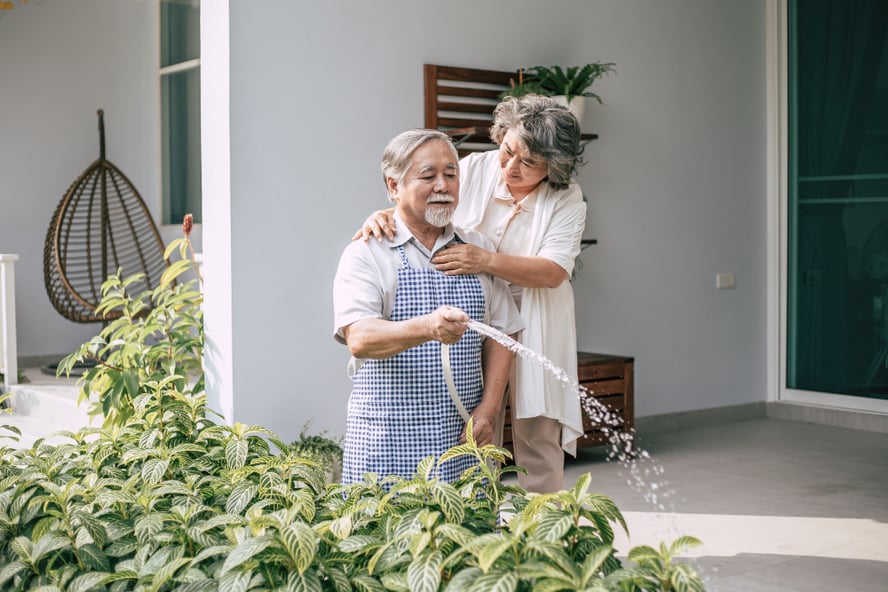
Image sourced from Dare to Finance
Living in Vietnam after retirement is no longer a fringe idea; it’s becoming a smart lifestyle arbitrage, offering the perfect balance of cost and comfort.
You earn, save and invest in SGD, one of the world’s strongest currencies. Then you spend in a lower-cost economy just two to three hours away from Changi. The math can be compelling.
But like all cross-border decisions, this is not just about cheaper pho and seaside cafés. It is about visas, healthcare planning, CPF strategy and how comfortable you are being structurally “foreign” in retirement.
Let’s break it down properly.
The Cost Equation: What Does Life Actually Cost?
In major cities such as Ho Chi Minh City, Hanoi or Da Nang, a single Singaporean retiree can live comfortably on roughly SGD 1,700–2,500 per month, depending on housing and lifestyle. In smaller coastal cities, that figure may fall closer to SGD 1,200–1,800.
For context: that is below what many Singaporeans spend monthly just maintaining a modest lifestyle at home.
Housing is where the contrast feels most obvious. A modern one-bedroom apartment in a good district of Ho Chi Minh City typically costs SGD 600–1,200 per month. In Da Nang or Nha Trang, similar units can range between SGD 400–800.
Compare that to private rental in Singapore, and the gap is immediate.
Food, transport and daily expenses are also meaningfully lower:
- Local meals: SGD 2–4
- Mid-range restaurant meals: SGD 10–25
- Ride-hailing and taxis: fraction of Singapore prices
- Groceries: cheaper if you buy local produce
But here’s the TFC question: cheap compared to what?
If you already own a fully paid HDB flat and live modestly, your marginal savings may not be dramatic. The arbitrage works best for retirees who would otherwise be renting, servicing a mortgage, or pursuing a more expensive private lifestyle in Singapore.
Healthcare: The Non-Negotiable Variable
This is where romantic retirement plans meet reality.
Vietnam’s major cities now have international-standard hospitals with English-speaking doctors. Basic consultations and procedures are cheaper than in Singapore.
However, the system is still developing.
Most Singaporean retirees who relocate take one (or both) of these approaches:
- Maintain comprehensive international medical insurance
- Budget for periodic return trips to Singapore for complex care
Expect to allocate SGD 300–800+ per month for insurance, depending on age and coverage.
If you are receiving CPF LIFE payouts, this healthcare buffer must be stress-tested. A lower cost of living is attractive — until one unexpected medical episode wipes out the savings.
Visa Reality: There Is No “Retirement Visa”
Unlike Thailand or Malaysia, Vietnam does not offer a straightforward retirement visa.
Long-term stays typically involve:
- Renewable visas
- Temporary residence cards tied to business or investment
- Family sponsorship arrangements
Many Singaporeans “test-drive” retirement by rotating extended stays on tourist or e-visas while exploring longer-term solutions.
Rules change. Immigration frameworks evolve. What works today may not work in five years.
If your retirement strategy depends entirely on regulatory goodwill, that is a risk worth pricing in.
Lifestyle: Familiar Enough, Different Enough
Vietnam offers a blend of comfort and contrast.
Ho Chi Minh City has modern malls, international schools, lively café culture and a sizeable expat community. Coastal cities like Da Nang and Nha Trang offer slower pace, beaches and cleaner air.
The language barrier is real, especially outside major urban centres. But many retirees adapt — basic Vietnamese phrases go a long way, and younger locals often speak conversational English.
The bigger question is psychological:
Are you comfortable being permanently outside your home system — legally, medically and socially?
Some Singaporeans thrive on that. Others underestimate how much they value institutional familiarity.
The Proximity Advantage
One major edge Vietnam has over many retirement destinations: proximity.
Direct flights between Singapore and Ho Chi Minh City, Hanoi or Da Nang are frequent and affordable. You are never more than a few hours away from family, familiar food, and Singapore’s medical infrastructure.
This reduces emotional friction. Retirement in Vietnam feels less like an irreversible migration and more like a flexible chapter.
That matters.
The Bottom Line
Retiring in Vietnam can transform a modest Singaporean retirement budget into a comfortable lifestyle. For someone drawing CPF LIFE, supported by private savings or dividend income, the numbers can work, very well.
But this is not simply about stretching dollars.
It is about:
- Visa sustainability
- Healthcare contingencies
- Currency risk
- Emotional resilience
Done thoughtfully, Vietnam can be a powerful lifestyle arbitrage.
Done casually, it becomes an expensive lesson in underestimating complexity.
As always, the numbers matter.
But the structure matters more.
References:
- Lawyers Vietnam, "Retire to Vietnam"
- Benjamin Sharvell, "How Much to Retire in Vietnam"
- Unbiased, "Retire in Vietnam"
- Dare to Finance, "Retiring in Southeast Asia 2025"
- Emerhub, "How to Retire in Vietnam as a Foreign Expat"
- Legend Travel Group, "Exploring Vietnam Golden Visa for Retirees: A Comprehensive Guide"
- Ministry of Foreign Affairs, Singapore, "Vietnam Travel Advisories, Notices and Visa Information"
- ExpatDen, "Vietnam Retirement Visa"
Let us know what you think about this topic, and what do you want to hear next.
You can now be our community contributor and make a pitch to have your favourite personality be on our show.
Join our community group and drop us your insights on this topic.




Let us know what you think of this post