
-3.png?width=50&name=Square%20(2)-3.png)

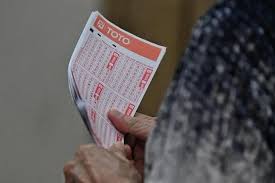
In Singapore, it’s almost a ritual: long queues at Singapore Pools outlets whenever the Toto Hong Bao draw or a big rollover is announced. People in office attire, uncles in slippers, students in school uniforms – all patiently lining up for a few slips of paper and a tiny chance at millions. On the surface, it looks irrational. The odds are brutally low, and most tickets will expire worthless. From a pure numbers point of view, it’s a terrible “investment”.
This is where Morgan Housel’s perspective in The Psychology of Money becomes useful. He argues that money decisions often look “crazy” only when we judge them without understanding the person’s life story. If you have stable income, decent savings, access to investments, and a believable path to higher earnings, it feels obvious that lottery spending is a waste. You can grow your wealth through promotions, side hustles, CPF top-ups, broker apps, robo-advisors and even property if you’re fortunate. To someone in this position, putting hard-earned cash into Toto when the odds are one-in-millions seems like lighting money on fire.

But this is far from the full picture. Housel points out that for many lower or middle-income households, especially those who feel stuck, the lottery can feel like the only realistic chance at a step-change in life. If your pay has barely moved in years, cost of living keeps rising, and you’re supporting kids and ageing parents, the traditional advice – “just save more and invest” – can sound detached from reality. When your margin is razor-thin, setting aside a few hundred dollars a month can feel impossible, and the dream of “financial freedom” looks like something reserved for a different class of people.
In that context, a Toto ticket is not really a financial product; it’s a small purchase of hope. For a few days before the draw, that slip of paper lets you imagine clearing debts, paying off the HDB, upgrading your parents’ lifestyle, or finally quitting a job that’s slowly draining you. You know, logically, that the odds are tiny – but emotionally, it may feel like the only door that hasn’t been slammed shut. Housel’s key line is that “no one is crazy”: people are responding to the incentives, constraints and stories in their own lives, not to a spreadsheet in someone else’s financial plan.
This doesn’t mean we should encourage reckless gambling or ignore the very real harm of throwing too much money at long-shot bets. Even Housel is clear that blowing your safety net on lottery tickets is a bad idea. But his framework challenges us to replace judgment with empathy. Instead of saying “these people are bad with money”, we can ask, “What does it say about our system if so many people feel the lottery is their only shot at moving up?” In a wealthy, developed city like Singapore, the popularity of Toto is not just a quirk; it’s a signal about how many people feel squeezed and stuck.
So the next time you walk past a snaking Toto queue, you can still decide that buying a ticket isn’t for you. But Housel would remind us: that doesn’t make everyone in the line crazy. It just means their reality, and the options they believe they have, are very different from yours.
Sources:
-
Morgan Housel – The Psychology of Money (2020), chapters on behaviour and “no one is crazy”.
-
Public commentary and analyses on lottery behaviour, hope, and low-income households in developed economies.
-
Local observations and media coverage of Toto participation and jackpot draws in Singapore.
Let us know what you think about this topic, and what do you want to hear next.
You can now be our community contributor and make a pitch to have your favourite personality be on our show.
Join our community group and drop us your insights on this topic.



Let us know what you think of this post