
-3.png?width=50&name=Square%20(2)-3.png)

The S$2 Billion COE Windfall Nobody Talks About
Vehicle Quota Premiums for FY2025 came in at S$8.66 billion; S$2.06 billion (31.1%) higher than the Government's original estimate. This wasn't a policy choice; it was a revenue windfall driven by sustained sky-high COE prices that few anticipated would remain so elevated.
Current COE prices as of January 2026 show Category A at S$102,009 and Category B at S$119,100. For FY2026, the Ministry of Finance projects another increase to S$9.42 billion, suggesting officials expect premiums to remain high.
The budget documents state: "Vehicle Quota Premiums are estimated to increase by S$0.76 billion (8.8%) to S$9.42 billion due to an expected increase in Certificate of Entitlement (COE) quota."
But here's the critical nuance: this quota increase isn't from expanding supply through policy reform. It's from anticipated higher vehicle deregistration rates as more cars reach their 10-year mark, essentially, natural fleet churn.
PARF Rebate Cuts: Making 10-Year Renewals More Attractive Than New Cars
Prime Minister Lawrence Wong's Budget announcement included a policy shift that fundamentally changes vehicle ownership calculations. The Preferential Additional Registration Fee (PARF) rebate will be slashed by 45 percentage points, with the cap dropping from S$60,000 to S$30,000.
The stated rationale: "Electric vehicles are less pollutive than conventional petrol cars. As EVs become more common, the need to encourage early deregistration through the PARF rebate is reduced."
Industry observers note this creates a perverse incentive structure. For a typical mainstream SUV, the PARF rebate for a nine-year-old car drops from over S$8,500 to around S$900. For luxury vehicles, the reduction is even more dramatic, from S$44,000 to approximately S$4,000.
Nicholas Wong, CEO of Kah Motor (Honda's distributor), stated: "The purpose of the PARF is to encourage more new cars on our roads by early de-registration. Now the incentive is reduced, it is counterintuitive."
Automotive consultant Vincent Ng explains the new calculus: "If the COE price is low, it is attractive to renew instead of de-registering the car. If the COE price is high, then it's even more attractive because a new car will be more expensive and you have less rebate to factor in."
Why There's No Structural Fix to COE Supply
The Budget documents reveal no structural adjustments to the COE quota system. The anticipated increase in quota, which underlies the Government's S$9.42 billion revenue projection, stems entirely from expected higher deregistration rates, not policy intervention to expand vehicle population.
Additionally, Motor Vehicle Taxes are projected to surge 17.2% to S$2.80 billion in FY2026, driven partly by the cessation of the Electric Vehicle Early Adoption Incentive rebate from 1 January 2027.
This creates a self-reinforcing fiscal dependency: high COE prices generate substantial revenue that the Government has now budgeted for. Any policy intervention to meaningfully expand supply would create a revenue shortfall elsewhere in the budget. 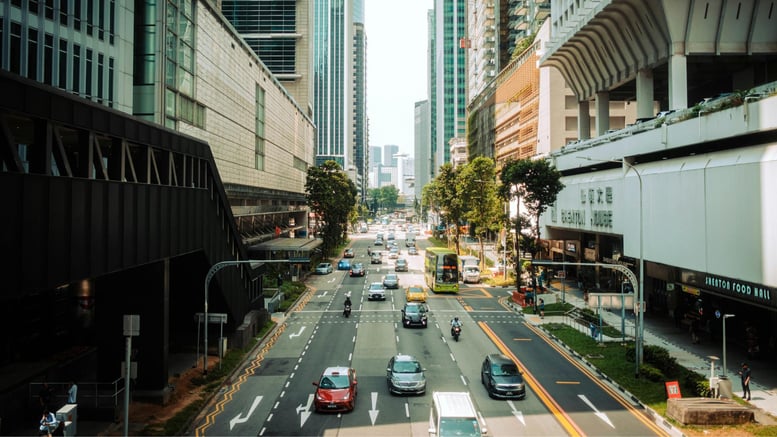
What High-Earning Professionals Are Really Subsidising
Let's be clear about what nearly S$12 billion in vehicle-related charges represents: revenue extracted primarily from middle-to-upper-income households who can afford to bid for COEs.
With Category B COEs at S$119,100, a family purchasing a S$200,000 car faces total upfront costs exceeding S$500,000 when factoring in Additional Registration Fee (ARF), COE, and GST. Over 10 years, this same family pays road tax annually, ERP charges, parking fees, and petrol duties.
The Budget 2026 analysis shows vehicle-related revenue now represents 9.1% of total operating revenue, nearly S$1 in every S$11 the Government collects.
Meanwhile, Corporate Income Tax collections surged 7.9% above estimates to S$35.24 billion in FY2025, with further growth to S$37.77 billion projected for FY2026, whilst the corporate tax rate remains at 17%, one of the lowest in the developed world.
The uncomfortable question: is Singapore's tax structure appropriately balanced when consumption-based taxes and vehicle charges, which disproportionately burden middle-income households, keep rising, whilst taxes on corporate profits remain globally competitive?
The PARF rebate reduction, as Vincent Ng notes, "has to provision less for early payouts and effectively increases ARF tax revenue recognised. It's a tax measure."
For Singaporean families navigating vehicle ownership decisions in 2026, the mathematics are clear: expect COE prices to remain elevated, PARF rebates to diminish, and the fiscal dependency on vehicle revenue to deepen. This isn't just transport policy, it's revenue policy disguised as environmental incentive.
Let us know what you think about our Budget 2026 topic, and what you want to hear next.
You can now be our community contributor and make a pitch to have your favourite personality be on our show.
Join our community group and drop us your insights on this topic.
References
- Ministry of Finance Singapore, Analysis of Revenue and Expenditure Financial Year 2026
- Motorist.sg, COE Prices and Bidding Results 2026 January
- The Business Times, Budget 2026: PARF rebate changes could boost EV adoption and COE renewals
- Channel NewsAsia, Budget 2026: Rebates for scrapping cars early to be reduced





Let us know what you think of this post