
-3.png?width=50&name=Square%20(2)-3.png)

While most Singaporeans were focused on CDC vouchers and tax rebates when Prime Minister Lawrence Wong delivered Budget 2026 on 12 February, the more revealing story lies buried in the expenditure tables: a dramatic reshuffling of government priorities that signals where Singapore is placing its bets for an uncertain future.
The S$154.7 billion budget isn’t just 8 per cent larger than last year—it’s a strategic repositioning. And if you read between the lines of ministerial allocations, you’ll see a government preparing for economic warfare, regional integration, and homeland security threats that most of us aren’t losing sleep over yet.
The Ministry Getting an 88% Spending Surge
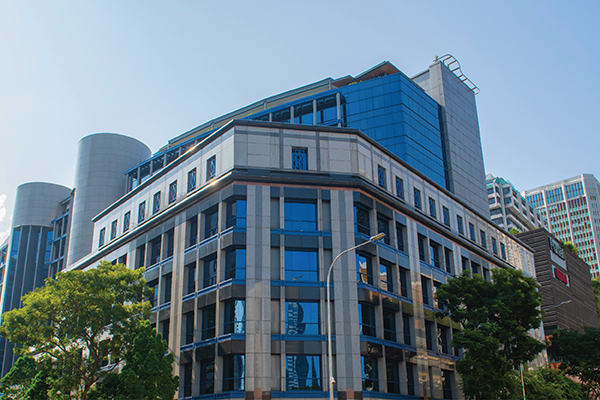
The standout winner? The Ministry of Trade and Industry (MTI), whose development expenditure is exploding by a staggering 87.7 per cent—from S$5.27 billion to S$9.24 billion. That’s an additional S$4.32 billion, making it the single largest budgetary increase across all ministries.
The official line is suitably vague: “initiatives to enhance Singapore’s economic competitiveness in an uncertain global environment,” according to the Ministry of Finance’s Analysis of Revenue and Expenditure document. But read the economic tea leaves, and the urgency becomes clearer.
Singapore’s GDP growth forecast for 2026 has been upgraded to 2.0–4.0 per cent, up from the earlier 1.0–3.0 per cent projection, driven largely by resilient global trade and AI-related demand. Yet Prime Minister Wong has repeatedly warned of a “more dangerous world” characterised by protectionism, tariff threats, and supply chain fragmentation. MTI’s war chest is Singapore’s insurance policy against becoming collateral damage in great power competition.
“Our sound public finances give us the ability to act decisively and to invest where it matters most,” Wong said in his Budget speech. “Many other countries are constrained by debt and deficit pressures, and are forced into difficult trade-offs, but Singapore begins this term of government on a firm fiscal footing.”
What exactly is MTI spending on? The Economic Strategy Review unveiled seven key strategies to keep Singapore “trusted, competitive and connected.” Translation: upgrading investment promotion tools, deepening tech capabilities, and ensuring we’re not left holding the bag if global trade routes get redrawn.
Home Affairs’ Infrastructure Mega-Projects
Running a close second is the Ministry of Home Affairs (MHA), with development expenditure jumping 109.9 per cent—from S$1.17 billion to S$2.46 billion. That’s a S$1.29 billion increase funding two major initiatives: the Johor Bahru–Singapore Rapid Transit System Link and the new Home Team Complex.
The RTS Link, targeted for passenger service by end-2026, isn’t just about cutting cross-border commutes to five minutes. It’s nation-building infrastructure that cements Singapore’s role as the gateway to Southeast Asia’s most populous markets. Malaysia’s Dewan Rakyat just passed the RTS Link Bill 2026 on 12 February, enabling joint enforcement and incident response at the border—a level of operational integration rare even among close allies.
Meanwhile, MHA’s operating budget also rose 8.7 per cent (S$740 million) to S$9.23 billion, “mainly due to higher grants to HTX.” For the uninitiated, HTX (Home Team Science and Technology Agency) is Singapore’s secretive statutory board developing capabilities in biometrics, chemical/biological/radiological/nuclear threats, cybersecurity, AI, and forensics. Think of it as Singapore’s homeland security R&D arm, and it’s getting a significant injection of funding just as cyber threats and hybrid warfare tactics proliferate globally.
Healthcare’s Predictable (But Necessary) Climb
Healthcare remains the perennial budget growth story. The Ministry of Health’s operating expenditure increased by S$1.55 billion (8.4 per cent) to S$20.04 billion, driven by higher grants to public healthcare institutions and enhancements to long-term care subsidies—a necessity as Singapore’s median age hits 42.9 years.
On the development side, MOH is spending an additional S$580 million (30.8 per cent increase) on Alexandra Hospital, Eastern General Hospital, the new Health Sciences Authority Building, and the Next Generation Electronic Medical Record system. If you’ve ever wondered why your polyclinic seems perpetually under renovation or why hospital queues never get shorter despite new facilities, this is why: Singapore is building healthcare infrastructure at pace with demographic ageing, not ahead of it.
Defence Holds Steady (For Now)
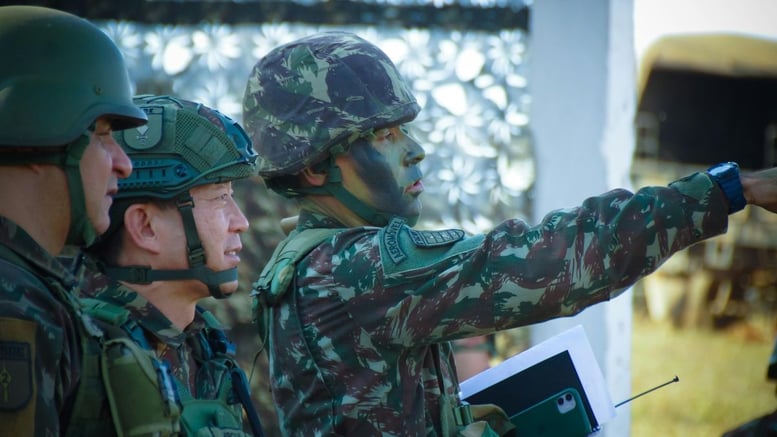
MINDEF’s operating expenditure rose a relatively modest 5.6 per cent (S$1.24 billion) to S$23.32 billion, keeping defence spending at roughly 3 per cent of GDP. “For now, we expect to keep defence spending at about 3 per cent of GDP,” Wong said, carefully adding that Singapore is “prepared to spend more if necessary.”
That qualifier matters. With geopolitical flashpoints from the Taiwan Strait to the South China Sea showing no signs of cooling, Singapore’s defence budget is less a fixed commitment and more a moving baseline that could escalate quickly if regional security deteriorates.
Education’s Quality-Over-Quantity Bet
The Ministry of Education saw operating expenditure rise by S$860 million (6.0 per cent) to S$15.27 billion, attributed to recruiting more educators, improving education quality and school facilities, and annual cost adjustments. Development spending jumped 63.9 per cent (S$460 million) for school building projects and a new Science Centre.
This isn’t just brick-and-mortar spending—it’s a tacit acknowledgement that Singapore’s competitive edge in the next decade hinges on whether our schools can produce graduates fluent in AI, critical thinking, and adaptability. As Wong emphasised in the Budget speech, artificial intelligence will fundamentally reshape work, and education spending is Singapore’s down payment on remaining relevant.

The Ministry Taking a Budget Cut
Conspicuously absent from the spending bonanza is the Ministry of Sustainability and the Environment (MSE), whose development expenditure plummeted 45.9 per cent—from S$1.48 billion to S$800 million. That’s a S$680 million reduction, partially offsetting increases elsewhere.
Does this mean Singapore is deprioritising climate action? Not quite. The document attributes the decrease to project cycles: large infrastructure initiatives (think coastal protection, waste management facilities) don’t scale linearly year-on-year. But it’s worth noting that in a budget prioritising economic competitiveness and security, environmental spending took the haircut.

The Bigger Picture: Betting on Connectivity and Competitiveness
If you zoom out, Budget 2026 reveals a government acutely aware that Singapore’s small size and resource constraints mean we can’t afford to be reactive. The massive MTI and MHA increases aren’t just line items—they’re strategic bets that Singapore’s future depends on staying economically indispensable and physically secure.
The revised FY2025 surplus of S$15.1 billion (nearly double initial estimates) came largely from higher-than-expected corporate income tax collections and COE premiums, reflecting strong economic performance and asset demand. But Wong cautioned that expenditure will continue rising across security, economic competitiveness, and social support.
“We will manage the increase in revenues and expenditure carefully, ensuring that spending is supported by collections, to maintain a balanced budget in the medium term,” Wong said.
For ordinary Singaporeans, these ministerial allocations might seem abstract compared to immediate cost-of-living concerns. But they’re the foundation that determines whether you’ll have a job in 2030, whether your neighbourhood remains safe, and whether your children’s education prepares them for an AI-driven economy or leaves them obsolete.
Budget 2026 isn’t just about the money. It’s about Singapore making calculated wagers on which capabilities will matter most when the world becomes less predictable, less rules-based, and potentially less friendly to small states. And judging by where the dollars are flowing, the government is betting heavily on economic resilience and strategic connectivity.
The question is whether these bets will pay off—or whether we’ll look back in five years wishing we’d allocated differently.
Let us know what you think about this topic, and what do you want to hear next.
You can now be our community contributor and make a pitch to have your favourite personality be on our show.
Join our community group and drop us your insights on this topic.
REFERENCES:
- Ministry of Finance Singapore, “Analysis of Revenue and Expenditure Financial Year 2026”
- Channel News Asia, “Budget 2026: Surplus for FY2025 revised up sharply to S$15.1b on higher corporate tax collections, COE premiums”
- The Straits Times, “Singapore Budget 2026: A step to secure the future”
- Ministry of Trade and Industry, “MTI Upgrades 2026 GDP Growth Forecast to ‘2.0 to 4.0 Per Cent’”
- Land Transport Authority, “Johor Bahru – Singapore Rapid Transit System Link”
- HTX, “Home Team Science and Technology Agency”
- Ministry of Defence Singapore, “Defence Spending”
- Singapore Budget, “F. Protect Our Security And Sustainability”




Let us know what you think of this post